A dental website has a bigger job than presenting services and contact details. It must earn trust, answer patient questions and guide visitors towards booking an appointment.
Strong dental website design combines clear content, simple navigation, fast pages and visible calls to action. For clinics competing for local patients, every page should make the next step clear. A well-planned dental website in Australia can also strengthen local visibility and help patients understand what makes a clinic suitable for their needs.
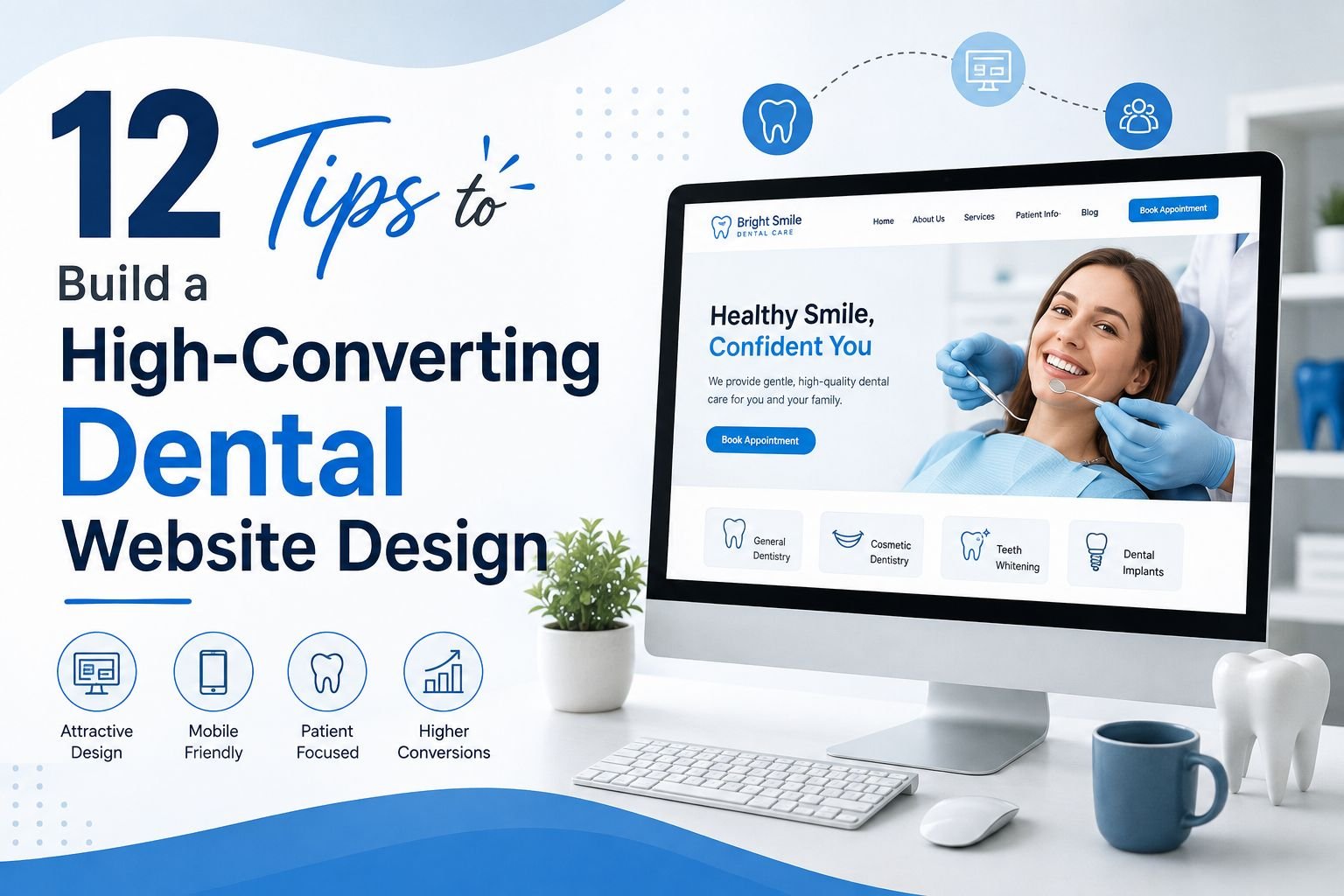
These 12 practical tips will help you create a website that turns more visits into patient enquiries.
Let’s Explore the 12 Tips for a High-Converting Dental Website
A strong website design for dental should make every patient’s journey clear, simple and stress-free. Explore these practical tips to improve usability, build trust and encourage more appointment bookings.
1. Build the Website Around Patient Needs
Patients visit a dental website with questions. They may want treatment information, opening hours, costs, directions, or an appointment. Your website should help them reach those answers without digging through several pages.
Plan the structure around the patient journey instead of your internal business structure. Keep important pages within easy reach and use familiar labels in the main menu.
Useful navigation options include:
- Treatments
- About the clinic
- Meet the dentists
- New patients
- Contact
- Book an appointment
Many dental practices offer several treatments, so grouping services into clear categories can prevent the menu from becoming crowded.
2. Put a Clear Booking Option in Key Places
A visitor who has decided to contact your clinic should not have to hunt for a booking page. Place a clear online booking button where patients can spot it during key stages of their visit.
Add the booking option to the header, treatment pages, contact page and other relevant sections. On mobile devices, make the button large enough for comfortable use.
Use direct call-to-action text such as:
- Book an Appointment
- Request an Appointment
- Call Our Clinic
- Contact Our Dental Team
A strong dental website design removes unnecessary steps between interest and action. The shorter this journey becomes, the easier it is for patients to contact your team.
3. Design for Mobile Users First
Patients often search for dentists from their phones, particularly when they need quick information about a treatment, clinic location, or emergency service. Current Australian dental web design pages place strong emphasis on mobile-first layouts and easy mobile booking.
Use a mobile-first design that keeps text readable, menus simple, buttons clear and forms short. Test every important page on different screen sizes.
Check whether patients can:
- Tap your phone number
- Open directions
- Read treatment information
- Complete a form
- Book an appointment
Good mobile usability can turn a short search into a valuable patient enquiry.
4. Make the Homepage Clear
Your homepage should tell visitors who you are, what you offer and where your clinic operates. Avoid filling the opening section with vague marketing statements.
Use a direct headline supported by a short explanation and one strong call to action. Mention your main treatments and location where they add useful context.
A strong homepage can also introduce your dentists, key services, opening hours and contact options. This approach gives new visitors enough information to choose their next page without creating clutter.
Good dental website design creates a clear path instead of forcing visitors to work out where they should go.
5. Create a Separate Page for Each Main Treatment
One broad services page rarely gives patients enough information. Create dedicated treatment pages for the core services your clinic provides.
For example, a practice may need separate pages for:
- Dental implants
- Teeth whitening
- Root canal treatment
- Emergency dentistry
- Veneers
- Children’s dentistry
Individual pages let you explain the treatment, common patient concerns, appointment process and relevant costs or payment information.
They also support dental SEO because each page can focus on a specific service and local search need. Australian search results show treatment-specific pages as a recurring recommendation for attracting patients searching for individual dental services.
6. Strengthen Local Search Visibility
Most clinics serve patients within a defined area. Your website should make that service area clear to both visitors and search engines.
Build your local SEO strategy around genuine location information. Include your clinic name, address, phone number, opening hours, map and directions. Keep these details consistent across your website and business listings.
Service and location content can also target relevant searches such as “emergency dentist + suburb” or “family dentist + location”. Australian dental marketing pages highlight suburb-based searches and phrases such as dentist near me as important local search themes.
Avoid stuffing location names into every paragraph. Write for people first and keep each reference useful.
7. Build Trust Through Your Team Pages
Choosing a dentist involves trust. Patients may want to know who will treat them before making contact.
Create individual profiles for dentists and key team members. Include professional photographs, qualifications, areas of clinical interest, experience and a short introduction to their approach to patient care.
For a dental website in Australia, content should also respect applicable advertising and professional requirements. Current Australian dental website guidance places AHPRA-aware content among the core considerations for clinic websites.
Clear team information gives the clinic a human face and can ease uncertainty for new patients.
8. Keep Forms Short and Simple
Long forms create friction. A person who wants to request an appointment should not need to complete a questionnaire before making first contact.
Ask only for information your reception team needs at that stage. A basic enquiry form may request:
- Name
- Phone number
- Email address
- Preferred service
- Short message
Keep field labels clear and show users what happens after submission.
A smooth appointment booking process matters because every unnecessary field creates another chance for the visitor to leave. Make the path from enquiry to contact easy to understand.
9. Improve Website Speed
A polished website for dentists loses value when pages take too long to load. Large photographs, heavy scripts, unnecessary plugins and booking tools can place pressure on performance.
Compress images, remove unused features, choose reliable hosting and review Core Web Vitals during development and maintenance. Australian dental SEO guidance identifies large clinical images, maps and booking widgets as common sources of performance problems.
Speed also shapes the patient experience. Someone searching with a phone wants treatment information, contact details, or directions without waiting for large page elements to appear.
10. Use Clear and Helpful Content
Dental language can become technical. Patients need information they can understand without a clinical background.
Explain treatments with short sentences and familiar terms. When you need a technical term, explain what it means. Break long sections into useful headings and short paragraphs.
Your content should answer questions such as:
- What does the treatment involve?
- Who may need it?
- What happens during an appointment?
- How can a patient book?
- Where can they find more information?
Clear writing strengthens patient trust and helps visitors make informed choices. It also gives search engines useful context about each page.
11. Place Calls to Action Where Decisions Happen
Do not rely on one booking button at the top of the homepage. Patients make decisions at different points.
A visitor may decide to call after reading about a treatment, meeting the dental team, checking clinic hours, or reviewing the location. Place a suitable call to action near these decision points.
For example, finish a treatment section with “Book an Appointment” or “Speak With Our Team”. Keep wording direct.
Conversion-focused dental website design guides visitors without crowding every section with buttons. Each call to action should connect with the information around it and offer a sensible next step.
12. Review and Improve the Website
A website for dentists needs ongoing attention. Services change, team members join, opening hours shift and patient search behaviour develops over time.
Review your website for broken links, old information, slow pages, missing treatment content and confusing booking paths. Check which pages attract visitors and which pages lead to enquiries.
Dental practices can use this information to decide where content or design needs improvement.
Review your online booking process on both desktop and mobile devices. Test forms, phone links, maps and calls to action. Regular checks protect the user experience and help your website remain useful as the clinic grows.
Conclusion
A high-converting dental website does not need complicated features. It needs a clear structure, useful treatment information, strong local signals, quick pages, simple contact options and a smooth booking journey. Great dental website design keeps patient needs at the centre of every decision, from the homepage to individual service pages.
Focus on clarity, trust, mobile usability and relevant local SEO foundations. Support those elements with helpful content and regular performance checks. When visitors can understand your services and reach your clinic without friction, your website becomes a practical tool for attracting enquiries and supporting long-term practice growth.
For expert support, Dental Website Design, a reliable dental website design company in Australia, creates user-friendly websites that help dental practices strengthen their online presence and connect with more patients. The team focuses on clear design, smooth navigation, and conversion-focused solutions that support practice growth.
Frequently Asked Questions
1. What makes a dental website high-converting?
A high-converting dental website combines clear navigation, treatment information, strong calls to action, fast pages, mobile usability, trust signals and simple booking options that guide patients towards contacting the clinic.
2. Why is mobile-first design important for dental websites?
Patients often search for dental services on smartphones. A mobile-friendly website makes treatment details, phone numbers, directions, forms and booking buttons easier to access without frustrating navigation or unreadable content.
3. How can a dental website attract more local patients?
Create useful service pages, include accurate location details, maintain consistent contact information, optimise local search content and make appointments easy to request when nearby patients discover your clinic through Google.
4. How often should a dental website be updated?
Review the website throughout the year to correct outdated services, staff details, opening hours, broken links, slow pages and booking problems while adding useful content that answers current patient questions.