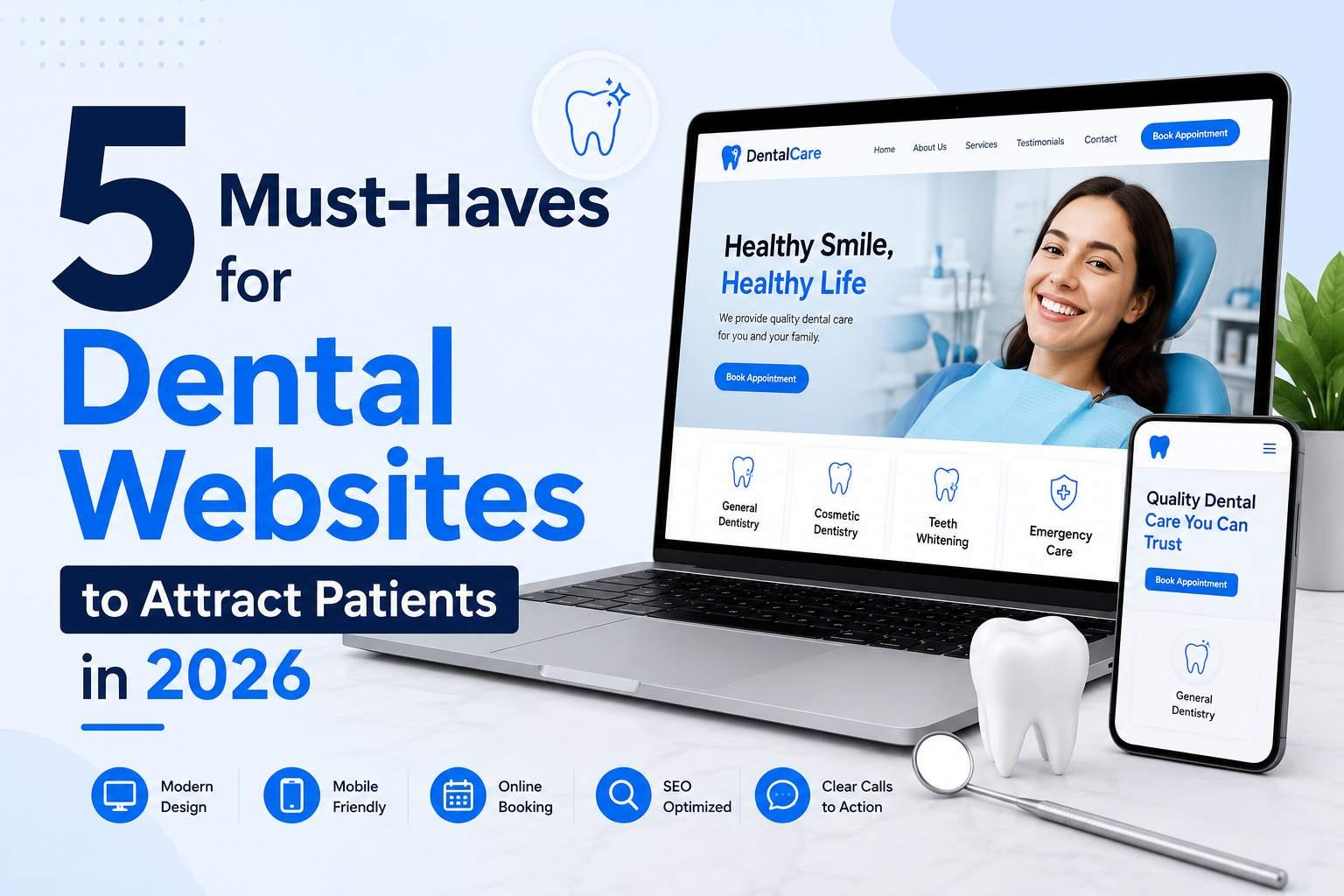
Your dental website is often the first thing potential patients see when they search for a dentist. In 2026, having the right features on your website is critical for attracting and keeping new patients. A good dental website design needs more than just pretty pictures. It must be useful, easy to navigate and built to turn visitors into actual patients.
Let’s explore the five essential elements that every dental practice needs on its website this year.
1. User Friendly Design That Makes Navigation Easy
The foundation of a successful dental web design starts with how your site looks and works. When someone visits your website, they should find what they need without frustration. Poor design and confusing navigation will make people leave your site quickly and you’ll lose potential patients.
A great dental website design includes a clean menu structure. Your visitors should easily find sections like “Services”, “About Us,” “Patient Information” and “Contact Us”. Mobile responsiveness is also essential. More people search for dentist on their phones than on computers, so your site must work perfectly on all devices. Pages should load fast too. Nobody wants to wait for a website to load. When your site is slow, people leave and find another dentist.
When it comes to website design for dentists, these are some of the key features that it should have. Some of the things that you need to focus on are speed, mobile friendly and easy to navigate site. It will help make an impression on the visitors and keep them interested.
2. Helpful Content That Educates Patients
Many dental websites focus only on promoting their services. They highlight treatments like teeth whitening or root canals without addressing what patients are really looking for. Before choosing a dentist, most people want clear answers to their questions and concerns.
A patient googling “Why are my teeth sensitive?” doesn’t want to see your whitening prices. They want to understand why this is happening and what they can do about it.
This is where your blog becomes valuable. Write about real things patients ask you about:
- “Is it normal to have pain after a filling?”
- “How often should you really get your teeth cleaned?”
- “What’s the difference between a crown and a filling anyway?”
These posts do two things. First, they help people. Second, they show Google (and potential patients) that you know what you’re talking about. You build trust before anyone even calls your office.
Your service pages matter too, but make them practical. Don’t just list your services. Explain them. Talk about what happens during the appointment. What should people expect? Are there things they should know beforehand? Include before-and-after photos. Show people that you actually deliver results.
When you combine great dental website design with this kind of helpful content, you’re not just getting visitors. You’re getting the right visitors. People who trust you before they even meet you.
3. Showcase Your Dental Team and Practice Values
People want to know who they’ll be seeing before they book an appointment. Introduce your team with professional photos and short bios. Let people know about your dentists’ qualifications, experience and any special training. A fun fact or personal touch about each team member makes them feel like real people, not just names on a website.
Your practice values matter too. What makes your dental office different? Do you focus on gentle care? Use the latest technology? Offer a relaxing environment? Share these things on your website. Patients choose their medical practice based on their personal values, which determine how doctors should treat them. When patients see that your practice shares their values, they’re more likely to book an appointment and become loyal patients.
Your dental web design should highlight your team prominently. Maybe include a “Meet Our Team” page with videos or a welcome message from your lead dentist. This personal connection is powerful and often makes the difference in a patient’s decision to choose your practice.
4. Use Reviews and Success Stories to Build Trust
Social proof is one of the most powerful tools that you can use on your website. Potential patients who see that others have had great experiences at your practice will feel more confident booking an appointment with you. Display patient reviews and ratings from platforms such as Google and Facebook directly on your website to show potential patients how happy your current patients are with your services.
Before-and-after photos are also very effective, especially for cosmetic dental work. These images show the amazing results you can achieve. They prove your skills and quality of work. Always get written permission from patients before sharing their photos or success stories.
Case studies are another helpful tool. Explain a patient’s situation, what treatment you provided and the results. You don’t need to use real names if privacy is a concern, but the story should be real and detailed. Real stories are much more convincing than anything you could say about yourself.
When choosing your dental website design and custom website design for dentists, make sure there’s space to showcase these success stories and reviews. They’re essential for building the trust that turns website visitors into patients.
5. Clear Calls-to-Action That Drive Appointments
Your website should make it easy for people to book an appointment. Add “Book an Appointment” buttons in places where visitors can see them quickly, such as the top of the page, the side and the bottom. Use bright colours that stand out and simple words that are easy to understand. If your website lets patients book online, it makes the process even easier. Many people like being able to book at any time, even outside clinic hours.
You can also give new patients a reason to choose your clinic. Offer a free check-up, a lower price on teeth cleaning, or a special deal for first-time visitors. Show these offers with a banner or pop-up on your website. Adding an end date can encourage people to book sooner. Place your booking buttons where visitors naturally look while reading. Try different button styles and messages to see what works best and helps more people book appointments.
Conclusion
Building a dental website that actually works takes thought. You need a dental website design that works smoothly and need content that helps people and shows your expertise. You need to be visible as a real person, not a faceless practice. You need proof that you’re good at what you do. And you need to make booking so easy that it feels silly not to.
This isn’t about having the most impressive website around. It’s about having a website that actually attracts patients, makes them feel comfortable and turns them into appointments. A well-built custom website design for dentists does all of this at once.
If you’re ready to build a website that helps your practice grow, Dental Website Design is here to help. We create professional, easy-to-use websites that attract more patients and support the long-term success of your dental practice.
FAQs
1. Why is a good dental website important?
The importance of a good dental website is that it provides valuable information to the visitors of the site, increases trust and credibility, answers frequently asked questions and makes appointment scheduling easier. Additionally, it can also increase the number of local clients.
2. What should every dental website include?
A good dental website must include clearly defined pages with services, proper website navigation, an appointment booking system, patient reviews, a contact page and a mobile-friendly design.
3. How can a dental website attract more patients?
A dental website attracts more patients by providing useful information, showing real patient reviews, loading quickly, working well on mobile devices and making it simple for visitors to book appointments.
4. How often should a dental website be updated?
A dental website should be updated regularly with fresh blog posts, new patient reviews, service updates and practice information. Regular updates keep your website useful and improve search engine rankings.