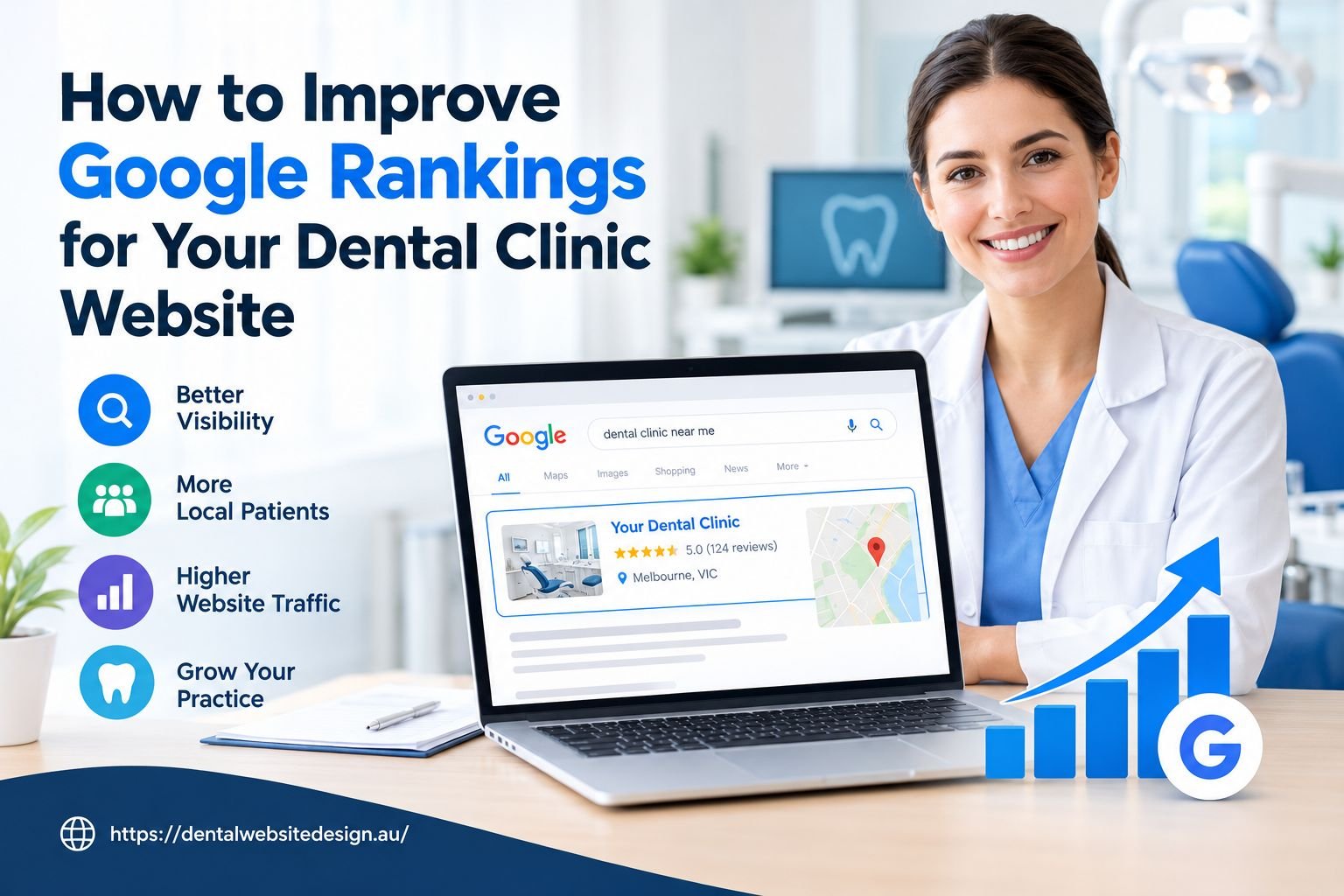

Every day, potential patients search Google Maps to find a trusted dental clinic nearby. If your practice isn’t visible in the local search results, you’re likely losing valuable appointments to competitors who are. Local SEO for dentists helps improve your online visibility, making it easier for people in your area to discover your practice, read patient reviews, and book an appointment.
A well-planned local SEO strategy strengthens your Google Business Profile, improves your website’s local relevance, and builds credibility across search engines.
In this guide, you’ll learn 15 proven local SEO strategies that can help your dental practice achieve higher Google Maps rankings and attract more local patients.
Why Local SEO for Dentists Matters to Your Practice
Google Maps dominates local search. When patients search “dentist near me,” they select from the top three options. This determines your patient flow.
Patients want quick access to your location, real reviews, current hours, and professional photos. Local SEO for dentists addresses these expectations. The difference is significant: page one rankings bring regular inquiries. Page three rankings mean struggling to fill appointments.
Strategy 1: Claim and Complete Your Google Business Profile
Your Google Business Profile forms the foundation of all local ranking efforts. Many practices overlook this step or leave it incomplete. Google treats incomplete profiles as inactive businesses. The algorithm pushes complete profiles higher in rankings.
Take these actions:
- Claim your business profile if you haven’t done so
- Verify your address and phone number match your actual location
- Upload professional photos of your practice interior, waiting area, and treatment rooms
- Add your logo and brand colours
- Write a compelling practice description (150-160 words)
Dentists who complete 80% of their profile information rank five times higher than those with minimal details. Every field matters.
Strategy 2: Manage Your Reviews With Strategy
Reviews play a vital role in local SEO for dentists, influencing both your Google rankings and patient decisions. A practice with 50 five-star reviews is more likely to rank higher than one with no reviews. However, Google considers more than review volume. Your overall star rating, the recency of reviews, and the quality of patient feedback all contribute to improving your visibility in local search results and Google Maps.
Build your review foundation through:
- Asking satisfied patients to share their experience
- Adding review request cards to your reception desk
- Following up with patients after appointments via email
- Mentioning reviews during checkout conversations
Respond to every review you receive:
A thoughtful response to a negative review builds trust more than no response does. Answer complaints within 48 hours. Offer solutions. Show that you value patient feedback. Your target rating sits between 4.5 and 4.8 stars. Perfection isn’t necessary. Consistency is.
Strategy 3: Optimise Your Website for Local Searches
Your website and Google Business Profile work as a team. They must contain matching information.
Include your full address on multiple pages—your homepage, contact page, and footer. Use the same format throughout. If your address reads differently on your website versus Google Business, the algorithm becomes confused.
Integrate location keywords naturally into your pages:
- Homepage: “Dental care in [your town] and surrounding areas”
- Services page: “Professional teeth whitening in [your city]”
- About page: “Serving [neighbourhood] residents for [X years]”
Don’t force keywords into awkward sentences. Write for patients first. Search engines second.
Mobile performance matters significantly. Over 70% of dental searches happen on phones. A slow website loses patients before they call. Test your website speed. Aim for page load times under three seconds. Fast sites convert browsers into patients.
Strategy 4: Create Content That Answers Local Questions
Generic dental articles rank poorly for local searches. You need location-specific content. Write blog posts about problems your patients face: root canal treatment, emergency care, orthodontics, and cosmetic dentistry. Use your location and town name in titles naturally.
Link these articles to your Google Business Profile. Content that addresses patient concerns ranks higher and converts readers into patients.
Strategy 5: Build Citations Across Relevant Directories
Citations are online mentions of your practice name, address, and phone number. They prove your business legitimacy.
List your practice on dental directories, health websites, and chamber of commerce platforms. Your NAP (Name, Address, Phone) information must match across every platform. Discrepancies damage your ranking. Create a spreadsheet tracking where your practice appears. Update it quarterly to maintain consistency.
Strategy 6: Develop a Strategic Keyword Approach for Google Maps
Google Maps uses different ranking signals than standard search. Include location keywords in your Business Profile description.
Use phrases like “dental services in [town]” and “family dentist near [area].” Research keywords your patients actually use. Use their language, not corporate jargon. Avoid keyword stuffing. Write naturally. Let keywords emerge from your message organically.
Strategy 7: Implement Structured Data Markup
Schema markup is an important part of local SEO for dentists because it helps search engines understand your practice information more accurately. Add the LocalBusiness schema to your homepage, including your practice details, phone number, opening hours, and reviews. This technical optimisation can improve your local search visibility and give your practice a competitive advantage over businesses that don’t use structured data.
Strategy 8: Post Regularly to Your Business Profile
Google monitors posting activity. Regular content signals an active, engaged business.
Post weekly updates. Share:
- New service announcements
- Patient testimonials and case studies
- Team introductions and staff highlights
- Seasonal promotions and special offers
- Holiday closures and hours changes
- Dental health tips and educational content
Each post should include a professional photo and a clear call-to-action button. Posts drive engagement and keep your profile active in Google’s algorithm.
Strategy 9: Encourage Patient-Generated Photos
User-generated photos carry tremendous weight. They provide authentic proof that other patients trust your practice. Display photos of your waiting room, treatment areas, and team members. Invite patients to upload their own photos. Feature patient uploads on your profile.
These images answer questions patients have before they call:
- Is the office clean and modern?
- Does the waiting area look professional?
- Do staff members appear friendly and competent?
- How busy is the practice?
Photos build confidence. Confidence converts into booked appointments.
Strategy 10: Maintain Accurate Business Information
Incorrect business hours frustrate patients. More importantly, Google penalises inaccurate information. Update your hours regularly. Mark seasonal changes, holiday closures, and emergency hours. Make appointment booking options visible.
List every service your practice provides:
- General dentistry
- Cosmetic treatments
- Orthodontics
- Implants
- Root canal therapy
- Teeth whitening
- Emergency care
Each service listing increases your visibility for related searches.
Strategy 11: Build Local Backlinks and Partnerships
Links from local websites boost your seo marketing for dentists efforts. Partner with local businesses, sponsor sports teams, and contribute to community websites. Each partnership generates inbound links and builds your local authority.
Strategy 12: Monitor and Respond to Patient Feedback
Google tracks how you respond to patient interactions. Respond to messages within 24 hours. Answer patient questions promptly. Show that you value communication.
Monitor your Google Business Profile messages, review responses, and call volume. This engagement signals to Google that you’re an active business.
Strategy 13: Track What Works and Adjust
You can’t improve what you don’t measure.
Monitor these metrics:
- Google Maps ranking position
- Review count and star rating
- Phone calls from Google
- Website traffic from local searches
- Appointment bookings from Google Maps
Use Google Search Console to track local search performance. Identify which keywords drive actual patient inquiries. Adjust your strategy based on real data.
The practices that rank highest continuously test, measure, and refine their approach.
Conclusion: Local SEO for Dentists Delivers Results
Local SEO for dentists is one of the most effective ways to attract nearby patients and grow your practice. By optimising your Google Business Profile, maintaining accurate business information, encouraging patient reviews, and improving your website, you can strengthen your visibility in Google Maps and local search results. Consistent optimisation delivers long-term benefits and keeps your practice ahead of local competitors.
At Dental Website Design, we specialise in helping dental practices improve their online presence through proven local SEO strategies and high-performing websites that generate more patient enquiries and appointments.
Frequently Asked Questions
1. How long does local SEO for dentists take to show results?
Most dental practices notice improvements within three to six months. The timeline depends on your competition, website quality, Google Business Profile optimisation, and the consistency of your local SEO efforts.
2. Why is Google Business Profile important for dental practices?
A well-optimised Google Business Profile helps your practice appear in Google Maps and local search results, making it easier for nearby patients to find, contact, and book appointments with you.
3. Can patient reviews improve my Google Maps ranking?
Yes. High-quality, recent patient reviews increase your practice’s credibility and influence local rankings. Responding to reviews also shows Google that your business is active and values patient feedback.
4. Is local SEO more effective than traditional advertising for dentists?
Local SEO targets people actively searching for dental services nearby, making it a cost-effective strategy for attracting qualified patients and generating long-term appointment bookings compared to many traditional advertising methods.